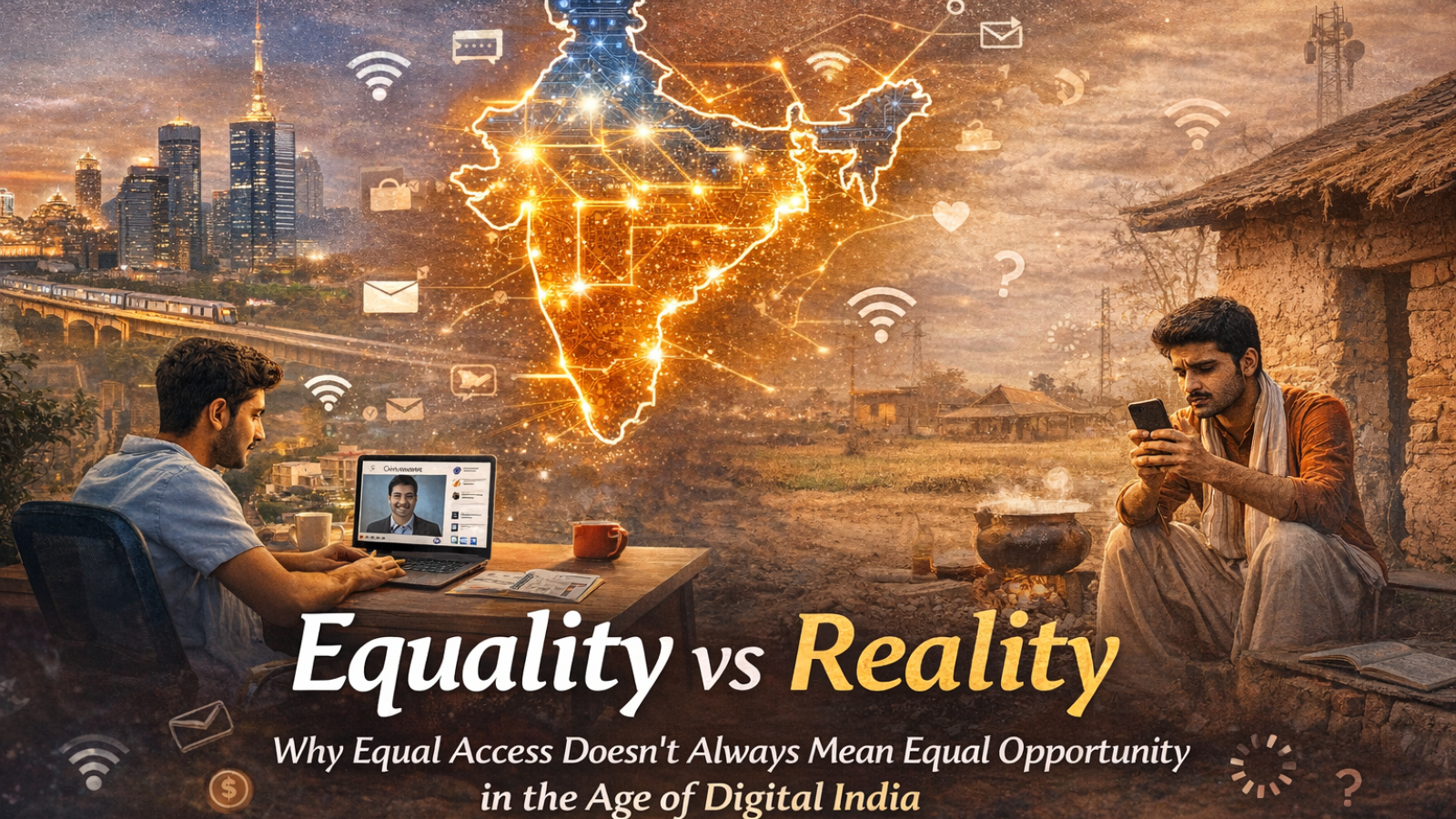
⚖️ Equality vs Reality
Why Equal Access Doesn’t Always Mean Equal Opportunity in the Age of Digital India
🌟 The Illusion of Equality in a Connected World
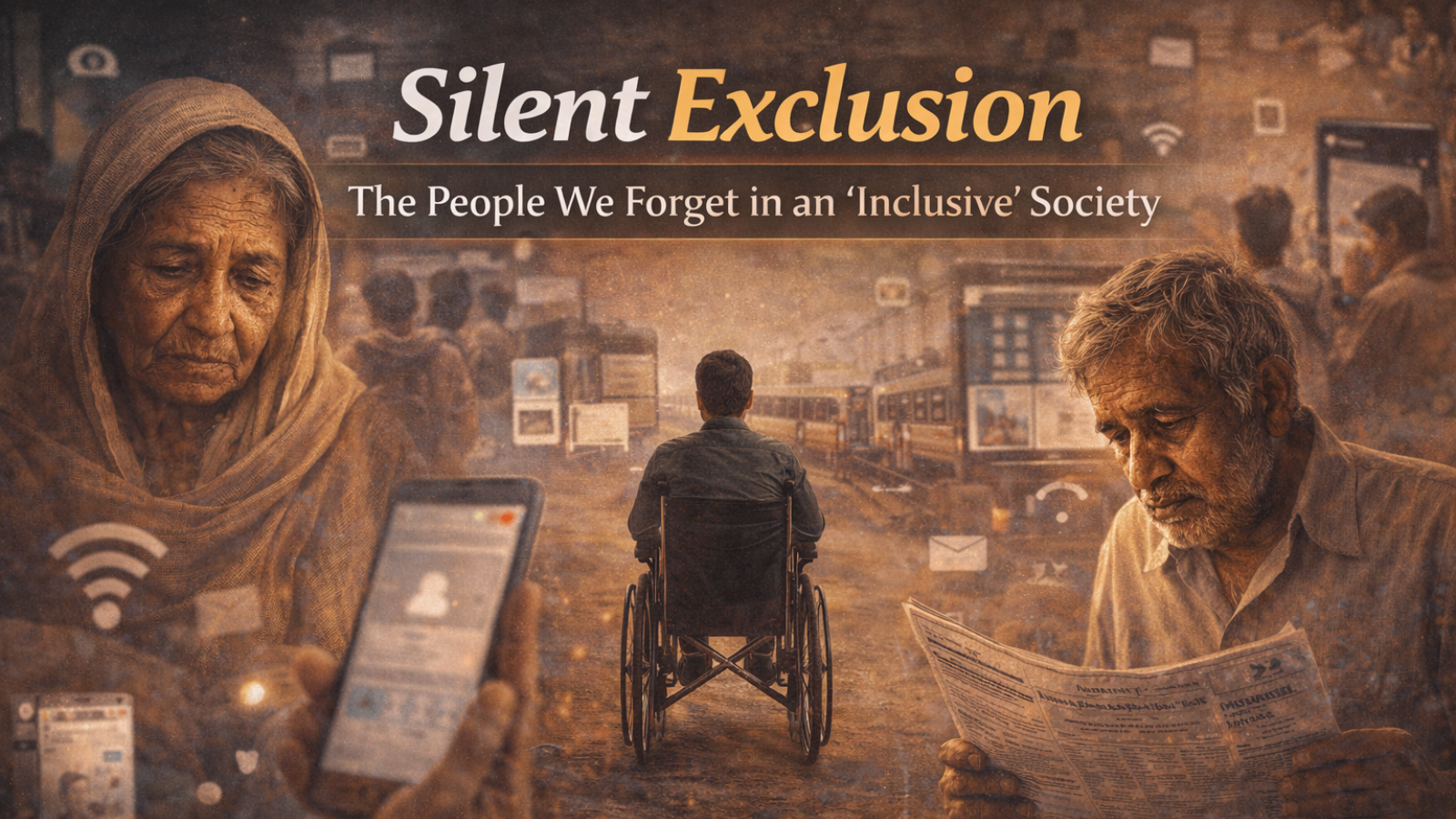
In today’s fast-moving digital era, the idea of equality feels closer than ever before. With smartphones in almost every hand, internet connectivity expanding across regions, and digital platforms becoming a part of everyday life, it often appears as though the world has become more equal. The narrative is simple and appealing: everyone is connected, everyone has access, and therefore, everyone has the same opportunity to grow.
In the context of Digital India, this belief becomes even stronger, as the initiative has significantly improved access to digital infrastructure and online services. However, beneath this surface-level perception lies a more complex reality. Equality, in its simplest form, means providing the same resources or opportunities to everyone. But real life is not that simple. People come from different backgrounds, face different challenges, and start from very different positions.
When these differences are ignored, equality becomes an illusion rather than a solution. In 2026, the conversation is shifting from merely providing access to questioning whether that access is truly meaningful. The question is no longer “Do people have access?” but rather “Can people actually benefit from that access?” This shift in perspective is essential for understanding the gap between equality and reality.
⚖️ Equality vs Equity: Understanding the Core Difference
To truly understand why equality often falls short, it is important to distinguish between equality and equity. Equality focuses on treating everyone the same, assuming that identical resources will lead to similar outcomes. While this approach may seem fair, it fails to consider the diverse circumstances that individuals face.
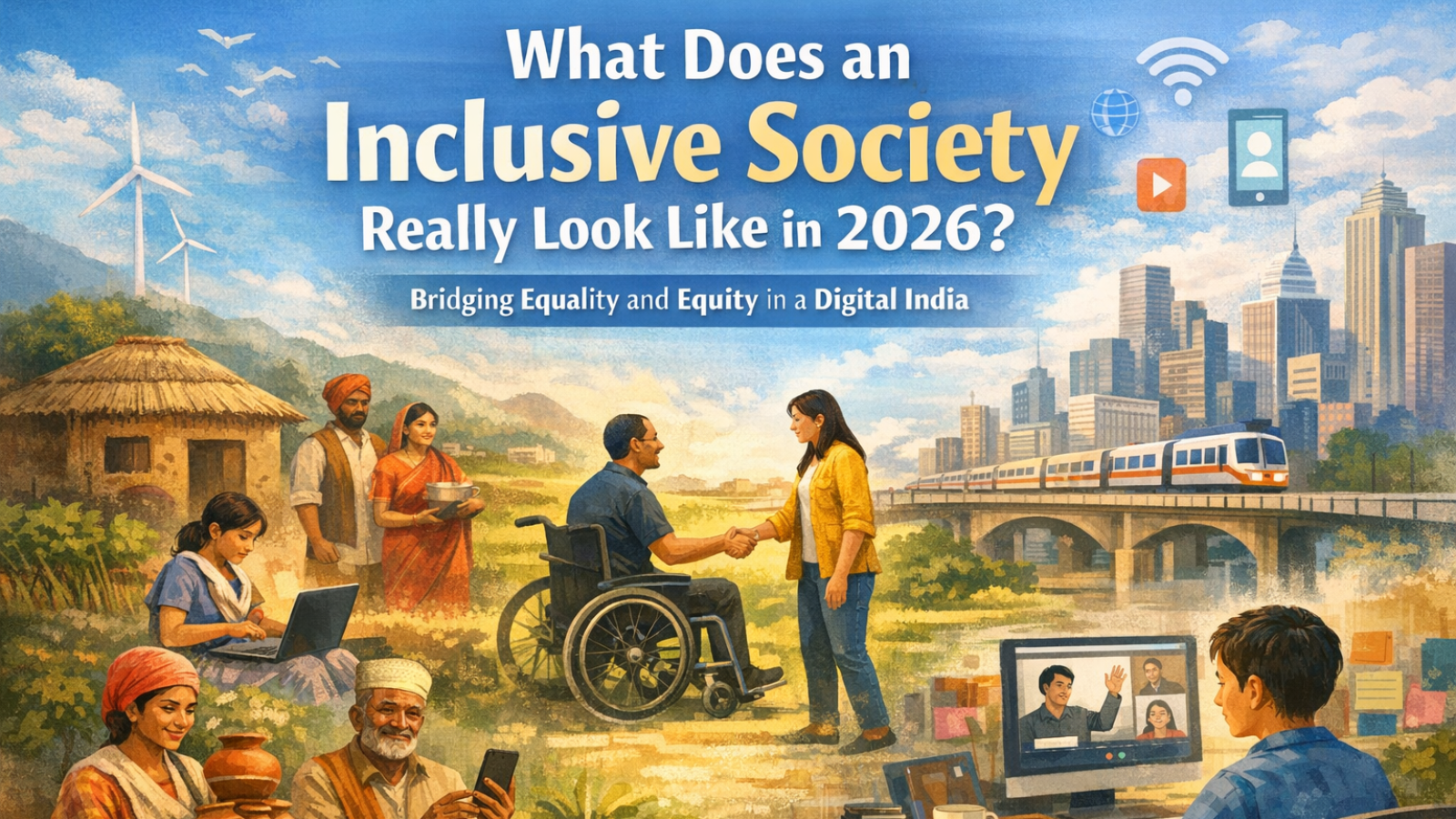
Equity, on the other hand, recognizes these differences and aims to provide support based on individual needs. It is about fairness, not sameness. For example, giving every student access to an online learning platform is equality. But ensuring that students who lack stable internet, devices, or a conducive learning environment receive additional support is equity. In the context of Digital India, this distinction becomes even more relevant.
While digital tools and platforms are becoming widely available, not everyone has the skills, awareness, or environment to use them effectively. True inclusiveness lies in bridging this gap between access and usability. Without equity, equality remains incomplete. It creates a system where opportunities exist in theory but are not fully accessible in practice. Recognizing this difference is the first step towards building a society that is not just equal but truly inclusive.
🌆 Urban Advantage vs Rural Reality
One of the most visible examples of the gap between equality and reality can be seen in the contrast between urban and rural areas. In cities, digital infrastructure is more advanced, internet connectivity is faster and more reliable, and individuals have greater exposure to opportunities.
Educational institutions, professional networks, and digital resources are more easily accessible. In contrast, rural areas often struggle with inconsistent connectivity, limited access to devices, and lower levels of digital literacy. While Digital India has made significant progress in bridging this gap, the difference still exists. A student in a city can attend online classes seamlessly, participate in virtual workshops, and access a wide range of resources.
Meanwhile, a student in a rural area may face challenges such as poor internet connectivity, lack of devices, or limited guidance. Both students may technically have access to the same platforms, but their ability to benefit from that access is vastly different. This disparity highlights the importance of moving beyond equality and focusing on equity. Inclusiveness requires not just providing access but ensuring that access translates into real opportunities for everyone, regardless of their location.
📱 Digital Access vs Digital Empowerment
Another critical aspect of this discussion is the difference between digital access and digital empowerment. Having access to technology is only the first step. True empowerment comes from the ability to use that technology effectively, creatively, and confidently. In 2026, many individuals have access to smartphones and the internet, but not everyone knows how to leverage these tools for growth.
Digital literacy, awareness, and confidence play a crucial role in determining whether access leads to opportunity. For example, someone may have a smartphone but may not know how to apply for jobs online, create digital content, or use platforms for learning. On the other hand, someone with the same device but better knowledge and skills can use it to build a career, start a business, or connect with a global audience.
This difference in usage creates a gap between those who are digitally included and those who are digitally empowered. Digital India has laid the foundation for access, but the next step is to ensure that people are equipped with the skills and knowledge needed to make the most of that access. Without empowerment, access alone cannot lead to inclusiveness.
💬 The Social Media Paradox
Social media is often seen as a symbol of equality, where everyone has the freedom to express themselves and share their ideas. In theory, it provides a platform where every voice can be heard. However, in reality, not all voices receive the same attention or recognition. Algorithms, trends, and audience preferences play a significant role in determining visibility.
Some individuals gain massive reach and influence, while others struggle to be noticed. This creates a paradox where everyone has the opportunity to speak, but not everyone is equally heard. Factors such as language, location, resources, and digital skills influence how content is created and consumed. A well-equipped creator with access to better tools, knowledge, and networks is more likely to succeed than someone who lacks these advantages.
This does not mean that social media is not inclusive—it has undoubtedly opened doors for many individuals—but it highlights the limitations of equality. Providing a platform is not enough; ensuring fair visibility and opportunities requires a deeper understanding of the challenges faced by different users. Inclusiveness in the digital age must address these hidden inequalities to create a more balanced and fair environment.
🎓 Education: Access vs Outcome
Education is another area where the gap between equality and reality becomes evident. Digital platforms have made learning more accessible than ever before, offering courses, tutorials, and resources on a wide range of subjects. However, access to these resources does not guarantee learning outcomes.
Students from different backgrounds face different challenges that affect their ability to learn effectively. Some may lack a quiet environment, proper guidance, or the motivation to engage with online content. Others may struggle with language barriers or technical difficulties. While the availability of educational resources is a positive step, inclusiveness requires addressing these underlying challenges.
It is not enough to provide content; it is equally important to ensure that students can understand, apply, and benefit from it. This requires a holistic approach that includes support systems, mentorship, and personalized learning experiences. Only then can education become truly inclusive.
🏡 Inclusiveness in Everyday Life
Inclusiveness is not limited to digital platforms or large systems—it is also reflected in everyday life. The spaces we live in, the environments we create, and the choices we make all contribute to the level of inclusiveness in society. In recent years, there has been a growing awareness of the importance of creating spaces that are welcoming and accessible to everyone.
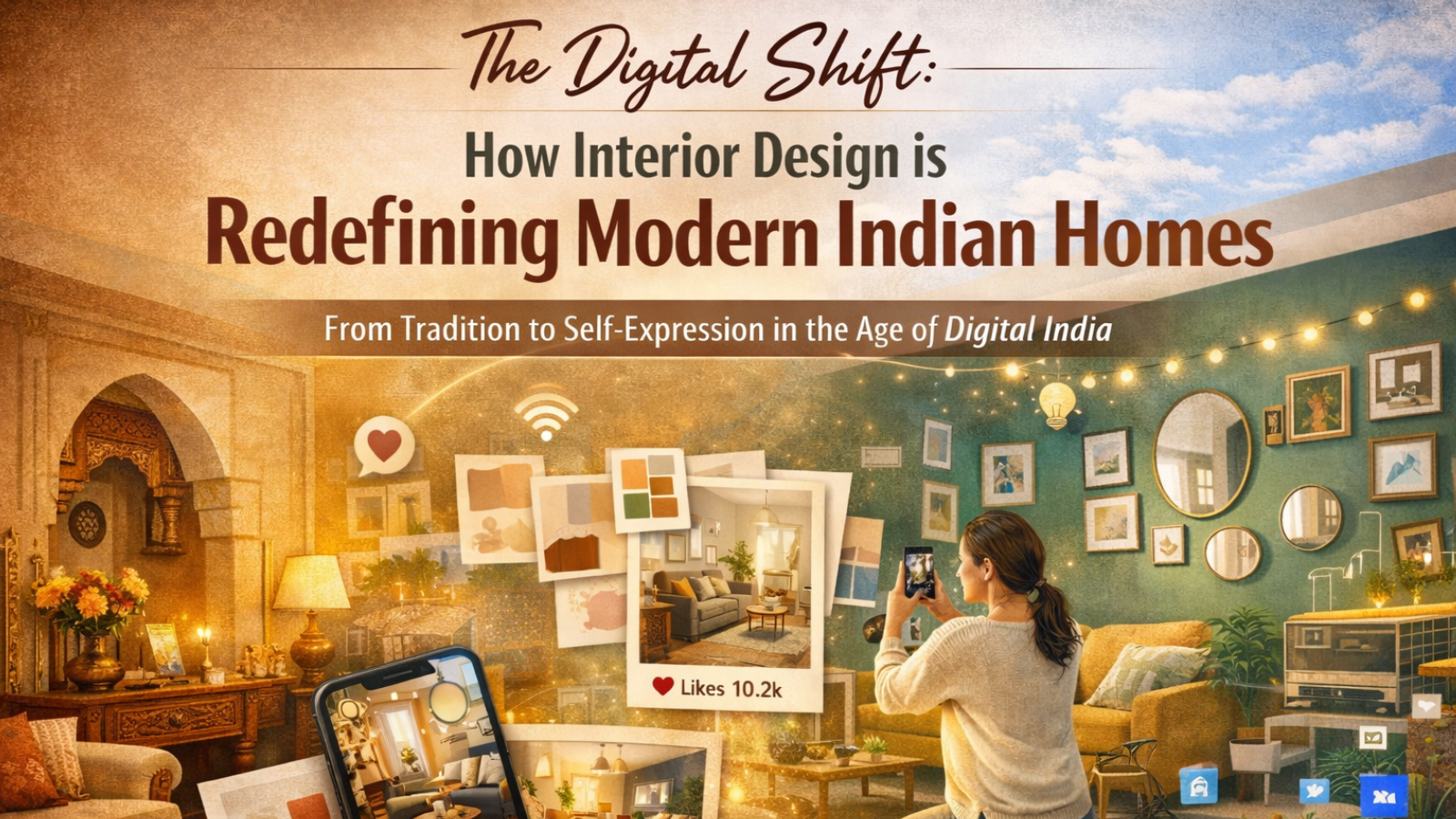
Homes, in particular, have become more than just physical structures; they are spaces of comfort, expression, and belonging. This is where brands like Dekorana play a meaningful role. By offering accessible and creative home decor solutions, Dekorana enables individuals to design spaces that reflect their identity and values. Inclusiveness in this context means creating environments where everyone feels comfortable and represented. It is about recognizing that inclusiveness is not just a concept but a lived experience that begins at home.
⚠️ Challenges That Still Exist
Despite the progress made through initiatives like Digital India, several challenges continue to hinder inclusiveness. The digital divide, lack of awareness, and socio-economic inequalities remain significant barriers. Not everyone has access to reliable internet or digital devices, and even those who do may not have the skills or confidence to use them effectively.
Additionally, issues such as misinformation, online harassment, and bias can create an environment that discourages participation. Addressing these challenges requires a collective effort from governments, organizations, and individuals. It also requires a shift in mindset, where inclusiveness is seen as a continuous process rather than a one-time achievement.
🔮 The Way Forward: From Equality to True Inclusiveness
Moving forward, the focus must shift from equality to true inclusiveness. This means recognizing the differences in people’s circumstances and addressing them through targeted support and interventions. It involves creating systems that are flexible, adaptive, and responsive to individual needs.
Digital India has provided a strong foundation for this transformation, but the journey is far from complete. Inclusiveness requires ongoing efforts to improve access, enhance digital literacy, and create opportunities that are accessible to all. It also requires a commitment to fairness, empathy, and understanding. By embracing equity and focusing on real outcomes, society can move closer to achieving true inclusiveness.
❤️ Conclusion: Beyond Access, Towards Opportunity
In conclusion, the idea of equality, while important, is not enough to create a truly inclusive society. Providing access is only the first step; ensuring that access leads to meaningful opportunities is what truly matters. In the age of Digital India, the challenge is not just to connect people but to empower them.
Inclusiveness is about bridging the gap between equality and reality, ensuring that everyone has the chance to grow, express themselves, and succeed. It is about creating a society where opportunities are not limited by background, location, or circumstances. As we move forward, the focus must remain on building systems and environments that support this vision. Only then can the promise of equality become a reality for everyone.