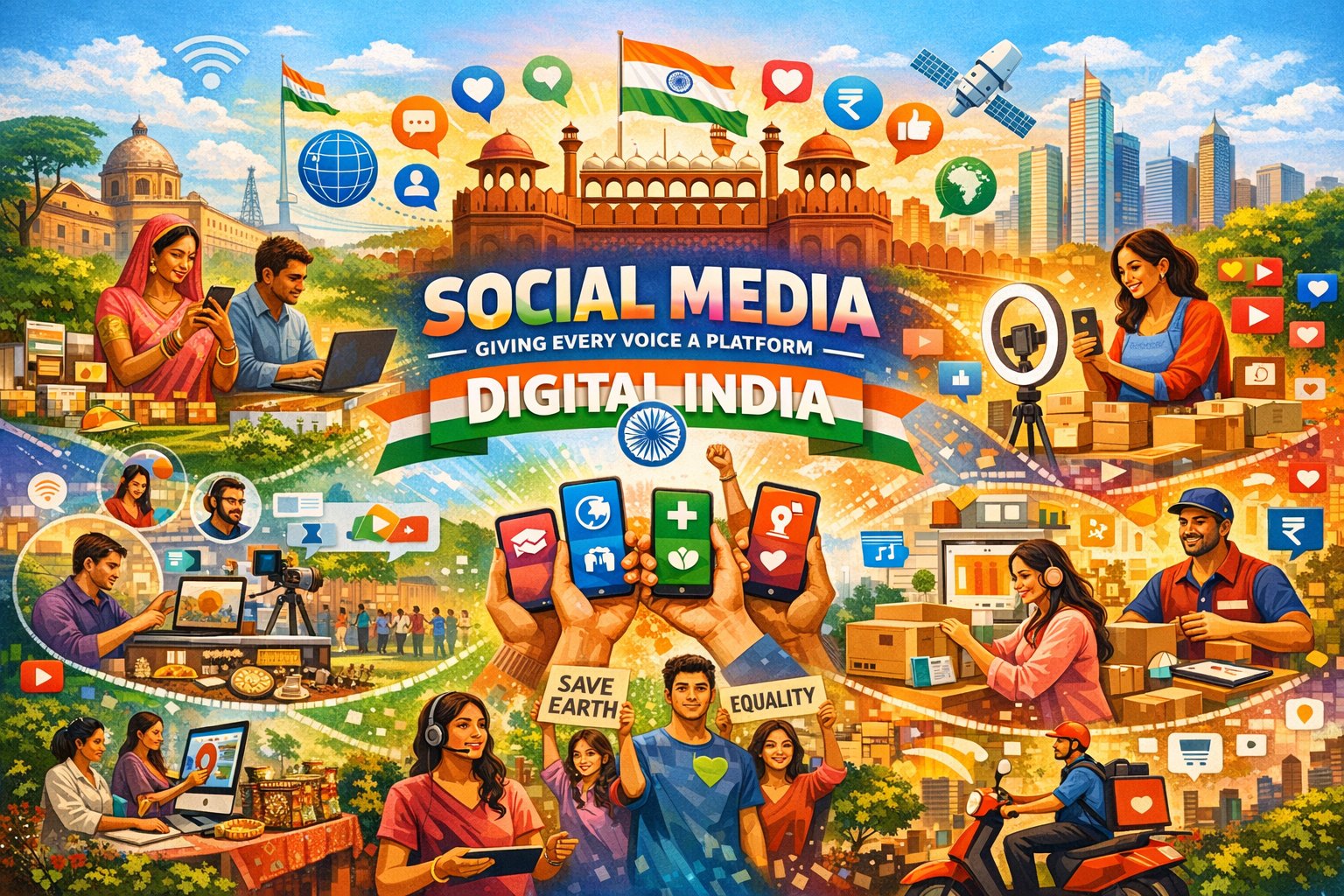
Digital India
Building an Inclusive Society Through Digital India
In the modern world, communication has evolved far beyond traditional boundaries. The internet has revolutionized the way individuals interact, share ideas, and participate in society. Among the most transformative innovations of the digital era is social media. Platforms that were once designed simply to connect friends and family have now grown into powerful spaces for expression, entrepreneurship, activism, and community building.
In India, this transformation has been deeply connected with the vision of Digital India, an initiative aimed at creating a digitally empowered society and knowledge-based economy. The goal of Digital India is to ensure that technology becomes accessible to every citizen and that digital infrastructure supports inclusive growth across the nation.
Social media plays an essential role in this transformation. Through the expansion of internet connectivity under Digital India, millions of people now have access to platforms where they can share their voices and ideas. Individuals from diverse regions, backgrounds, and professions can participate in conversations that shape public opinion and social change.
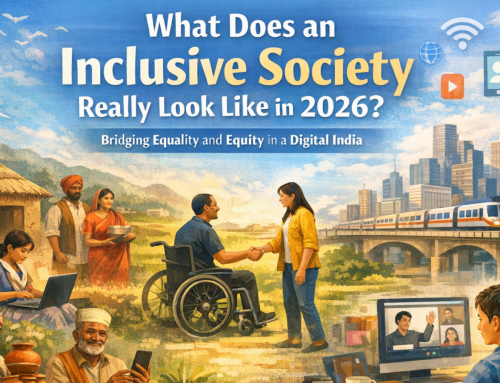
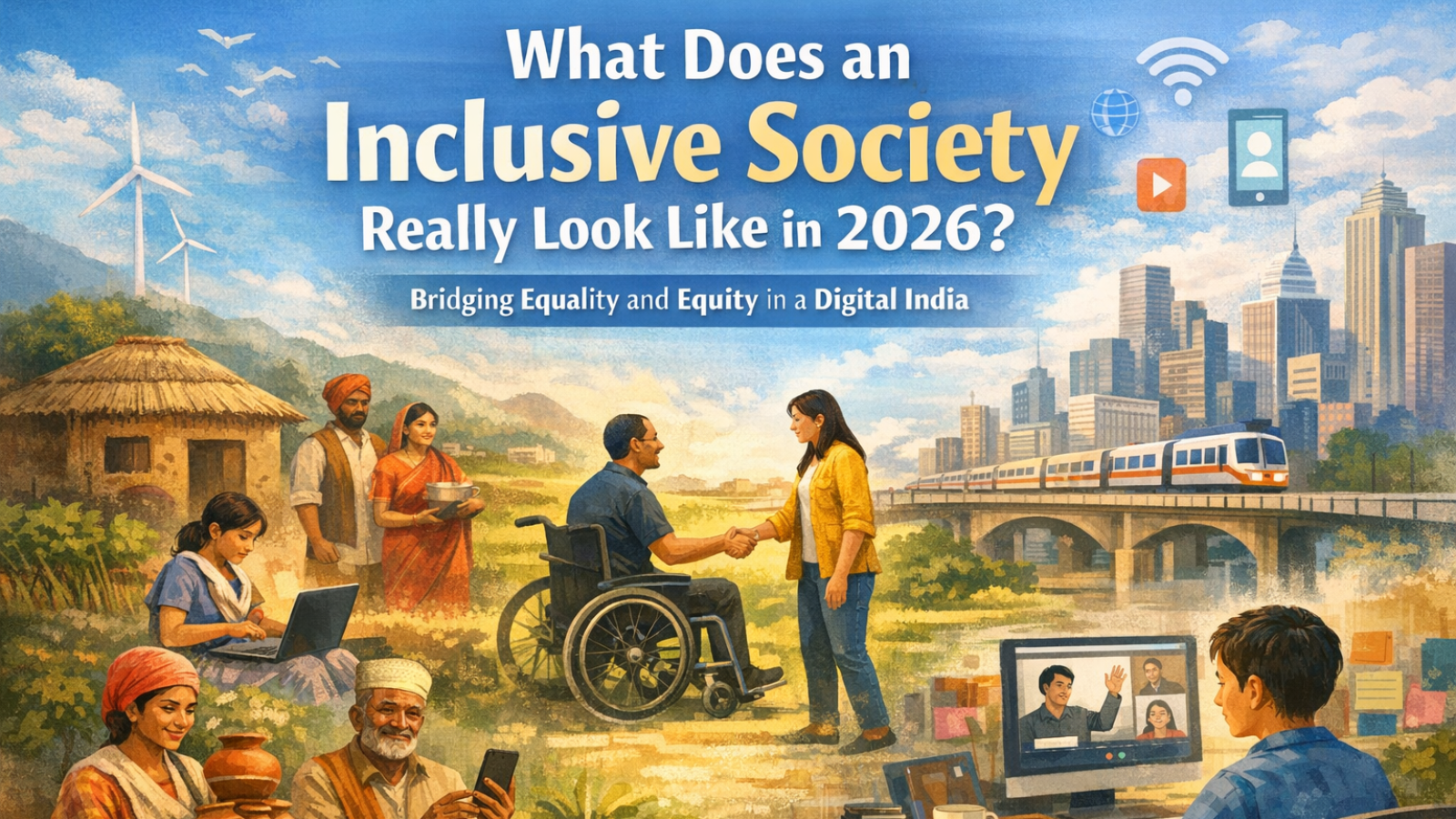
An inclusive society is one where everyone has the opportunity to participate, express opinions, and access opportunities for growth. Social media, supported by the infrastructure of Digital India, contributes to this vision by allowing individuals to connect, collaborate, and communicate without barriers.
As India continues its journey toward becoming a developed nation by 2047, the role of Digital India and social media in strengthening an inclusive society will only become more significant.
The Growth of Social Media in the Digital India Era
Over the past decade, India has witnessed a remarkable expansion in digital connectivity. Affordable smartphones, low-cost data plans, and improved digital infrastructure have enabled millions of people to access the internet. These developments have been driven largely by initiatives under Digital India, which aim to bring technology to every corner of the country.
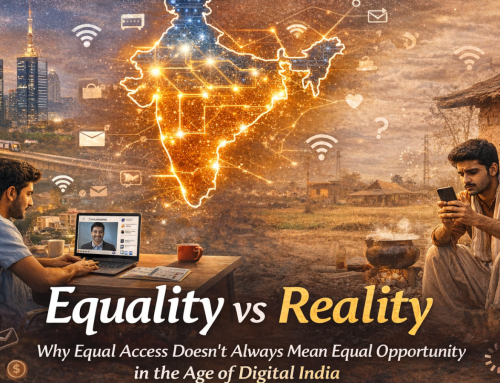
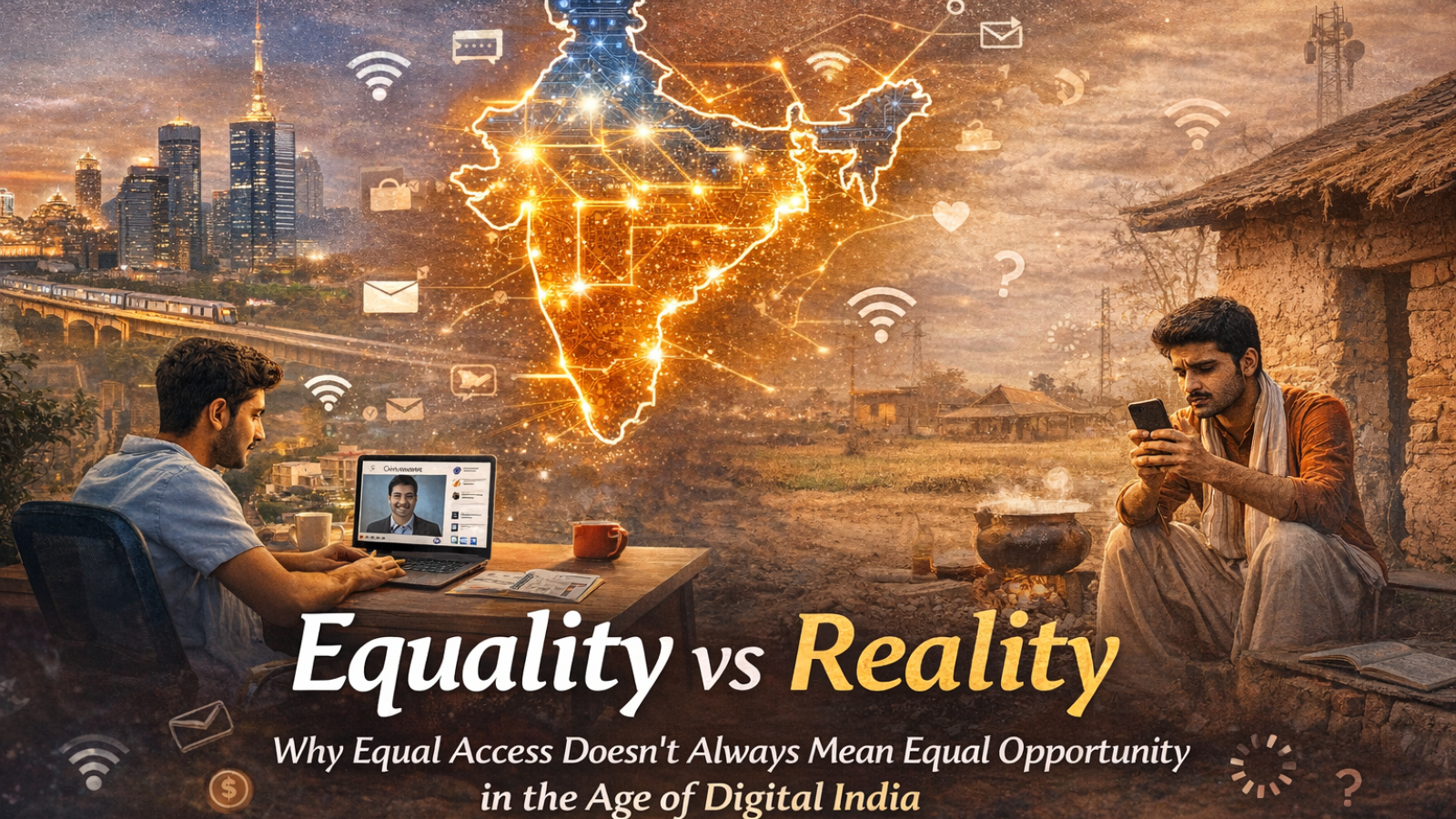
The expansion of Digital India has helped bridge the gap between urban and rural communities. Individuals who previously had limited access to information and communication platforms are now actively participating in the digital ecosystem.
Social media platforms have become central to this transformation. Through the framework of Digital, people use social media to learn new skills, build communities, promote businesses, and express their creativity.
The rise of social media has also changed the way information is shared. Earlier, traditional media such as newspapers, television, and radio controlled the flow of information. These channels often represented limited perspectives and voices.
However, the emergence of social media under Digital India has democratized communication. Today, anyone with internet access can share ideas, opinions, and experiences with a global audience.
This shift has empowered individuals and strengthened democratic participation. By enabling open dialogue and knowledge sharing, Digital India has created opportunities for citizens to actively contribute to society.
Awareness Movements in the Age of Digital India
One of the most powerful aspects of social media within the Digital India ecosystem is its ability to raise awareness about important social issues. Social media platforms allow individuals and organizations to educate communities, spread knowledge, and mobilize people for meaningful causes.
Campaigns related to environmental protection, mental health awareness, gender equality, education, and public health have gained significant attention through social media. The digital infrastructure provided by Digital India ensures that these messages reach people across different regions.
Through Digital India, awareness campaigns are no longer limited to large cities or traditional media channels. Individuals living in smaller towns and rural communities can also participate in discussions about social issues.
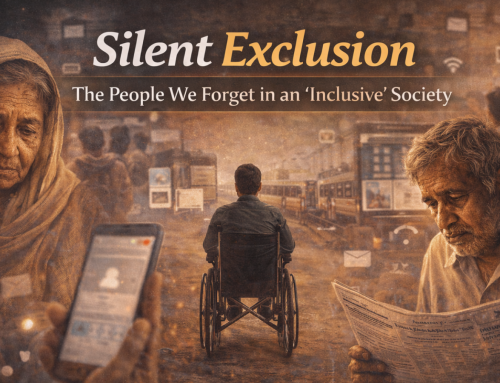
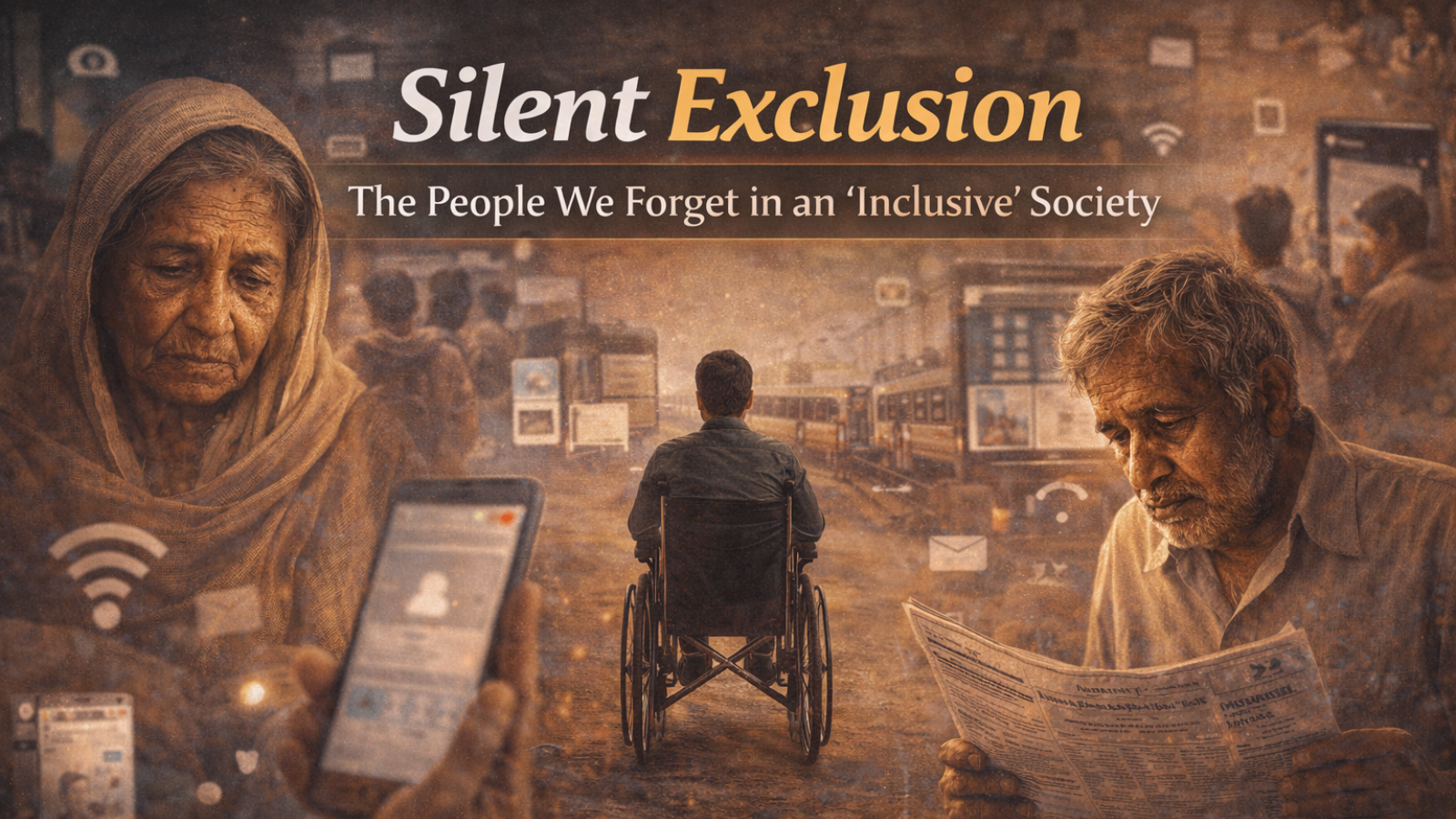
Another important advantage of Digital is that it amplifies voices that were historically underrepresented. Marginalized communities can now share their experiences and perspectives through social media platforms.
These digital conversations encourage empathy and understanding among people from diverse backgrounds. When individuals learn about different perspectives, they become more aware of social challenges and more motivated to contribute to solutions.
The ability of social media to inspire collective action demonstrates how Digital India is helping build a more informed and inclusive society.
The Rise of Digital Creators in Digital India
Another significant development supported by Digital India is the growth of the creator economy. Social media platforms allow individuals to share their talents, knowledge, and creativity with audiences around the world.
Digital creators produce a wide range of content, including educational videos, storytelling, photography, art, lifestyle content, and tutorials. Many creators start by sharing their passions online and gradually build communities around their content.
The expansion of Digital India has made it easier for creators to reach large audiences without needing expensive equipment or professional studios. With a smartphone and internet connection, individuals can create meaningful content and connect with viewers.
Many creators have transformed their digital presence into professional careers through partnerships, brand collaborations, and monetization opportunities. The creator economy supported by Digital India has opened doors for individuals who may not have had access to traditional career paths.
Young people in particular have embraced these opportunities. Students and aspiring entrepreneurs use social media to share innovative ideas and inspire others.
By encouraging creativity and innovation, Digital India has created a platform where talent can thrive regardless of geographical location.
Local Businesses Going Digital
Small and local businesses have also benefited greatly from the growth of social media within the Digital India ecosystem. In the past, entrepreneurs often faced challenges in reaching wider audiences due to limited marketing resources.
Today, social media platforms allow businesses to promote their products and services to customers across the country. Through Digital India, entrepreneurs can create digital storefronts, share product images, and interact with customers directly.
This transformation has made entrepreneurship more accessible and inclusive. Small businesses now have the opportunity to compete with larger companies and build strong online identities.
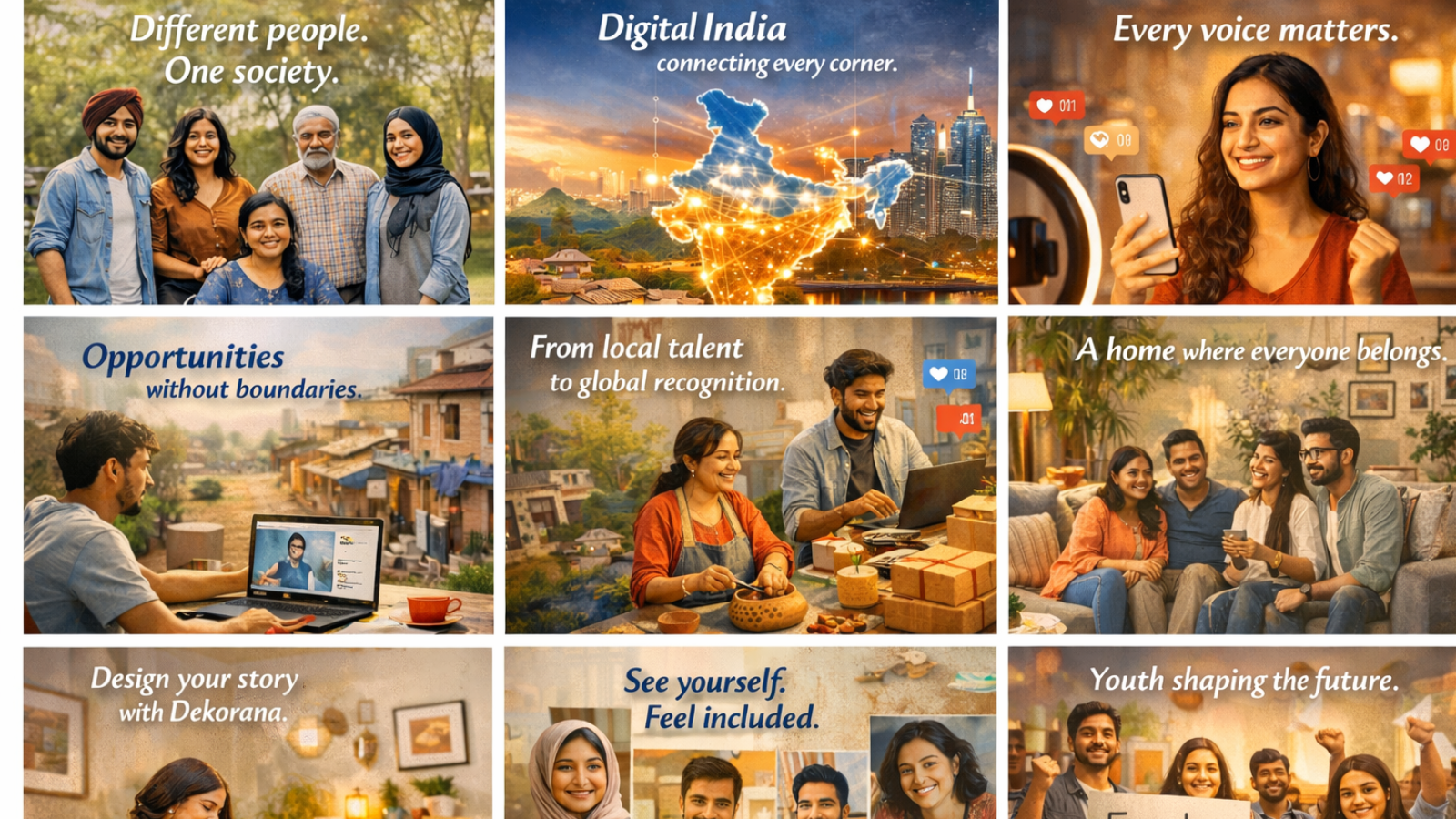
For example, home décor brands such as Dekorana can showcase their creative designs on social media platforms. Through the opportunities created by Digital India, Dekorana can connect with customers who value aesthetic and meaningful living spaces.
Social media allows brands like Dekorana to engage with their audience, receive feedback, and develop products that reflect customer preferences. This interaction strengthens relationships between businesses and consumers.
Digital payments and online marketplaces also support this ecosystem. Through Digital India, customers can easily purchase products online, while businesses can manage transactions securely.
As more entrepreneurs adopt digital strategies, Digital India continues to strengthen India’s economic landscape.
Youth Activism and Social Participation
Young people play a crucial role in the success of Digital India. As digital natives, they are comfortable using technology to communicate, collaborate, and advocate for change.
Social media platforms supported by Digital India allow young individuals to express their ideas and raise awareness about important issues. Topics such as climate change, education reform, mental health awareness, and social equality are frequently discussed in digital spaces.
Through Digital India, youth voices can reach audiences far beyond their local communities. A student sharing a thoughtful idea online can inspire thousands of people to engage in meaningful conversations.
Youth activism through social media also encourages civic engagement. When young individuals participate in discussions and campaigns, they develop a deeper understanding of social challenges.
The creativity and energy of young citizens are essential for the success of Digital India. Their ideas and innovations will shape the future of the nation.
Challenges in the Digital Landscape
Despite its many advantages, the expansion of social media under India also presents challenges. Issues such as misinformation, cyberbullying, and online harassment must be addressed to ensure a safe digital environment.
Misinformation can spread rapidly through social media platforms, which makes digital literacy an important component of India. Individuals must learn how to verify information before sharing it online.
Promoting responsible digital behavior is essential for maintaining healthy online communities. Educational institutions and organizations can support the goals of Digital India by teaching individuals how to use technology ethically.
Cybersecurity is another important concern. As more people participate in the Digital India ecosystem, protecting personal information and digital identities becomes crucial.
By addressing these challenges, India can continue to empower individuals while maintaining a safe and responsible digital environment.
The Future of Social Media in Digital India
The future of social media within India is filled with possibilities. Technological advancements such as artificial intelligence, virtual communities, and digital marketplaces will further expand opportunities for individuals and businesses.
As Digital India continues to grow, more people will gain access to digital tools that support education, entrepreneurship, and creativity.
Businesses like Dekorana will continue to benefit from the digital ecosystem created by Digital India, using social media to connect with audiences and share innovative ideas for modern homes.
Social media will also continue to promote cultural exchange and collaboration across regions. People from different backgrounds will have the opportunity to share traditions, ideas, and experiences with one another.
The vision of Digital India is not only about technological progress but also about empowering individuals to participate in the digital world.
Conclusion
Social media has transformed the way people communicate, learn, and participate in society. By giving individuals the ability to share ideas and connect with communities, it has become a powerful tool for empowerment and inclusion.
Through initiatives such as India, technology has made communication more accessible and opportunities more inclusive. Awareness movements, youth activism, digital creators, and small businesses all contribute to the success of Digital India.
As India moves toward the vision of Viksit Bharat 2047, the principles of India will remain central to building a society where every voice matters.
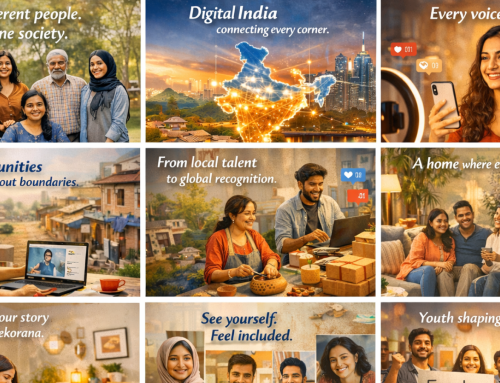
A truly inclusive society is one where individuals from every background have the opportunity to speak, create, and succeed. Through Digital India, social media is helping build a future where technology connects people, empowers communities, and ensures that every voice has a platform.